
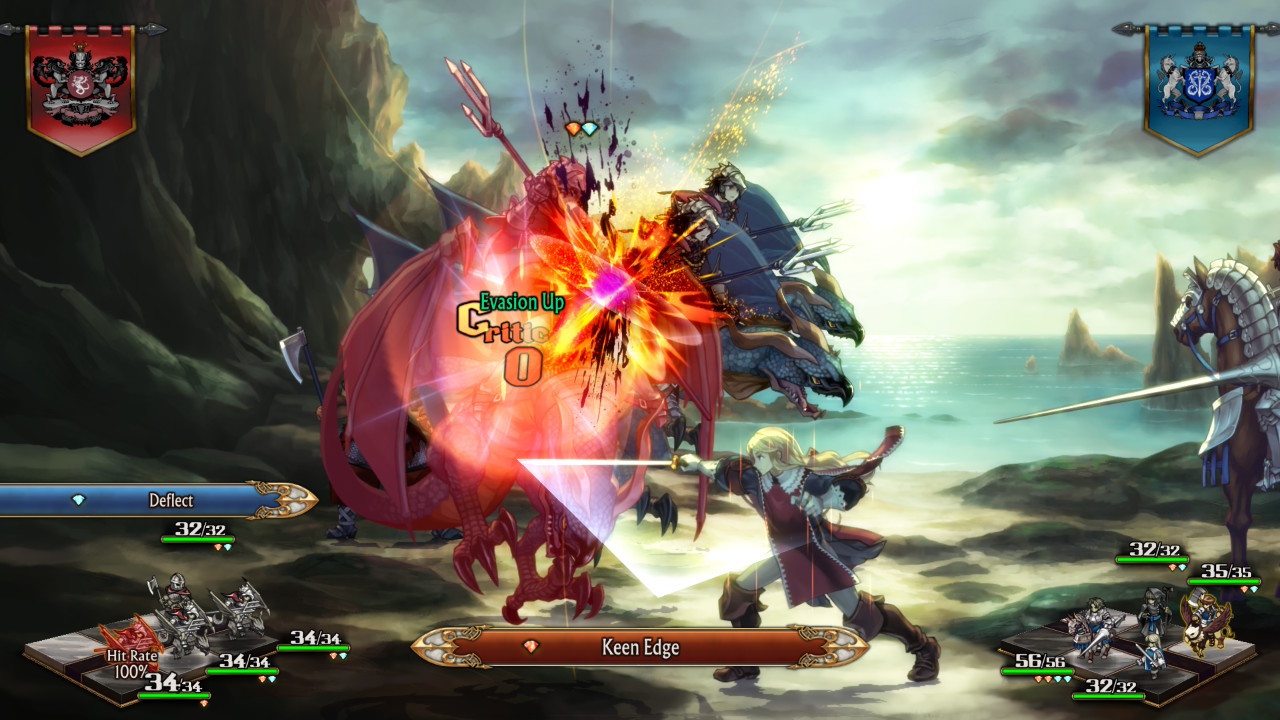
On the ugvm Podcast a number of months ago, Choobs spoke about Unicorn Overlord at length and the idea of battles within battles really appealed so I put it on a wishlist. I’ve now had the game for months but on a later episode of the same podcast, Kendrick dissed it and that put me off a bit so it got moved down the pile until I picked it out a couple of weeks ago. Well, Choobs was right and Kendrick was wrong because it’s amazing.
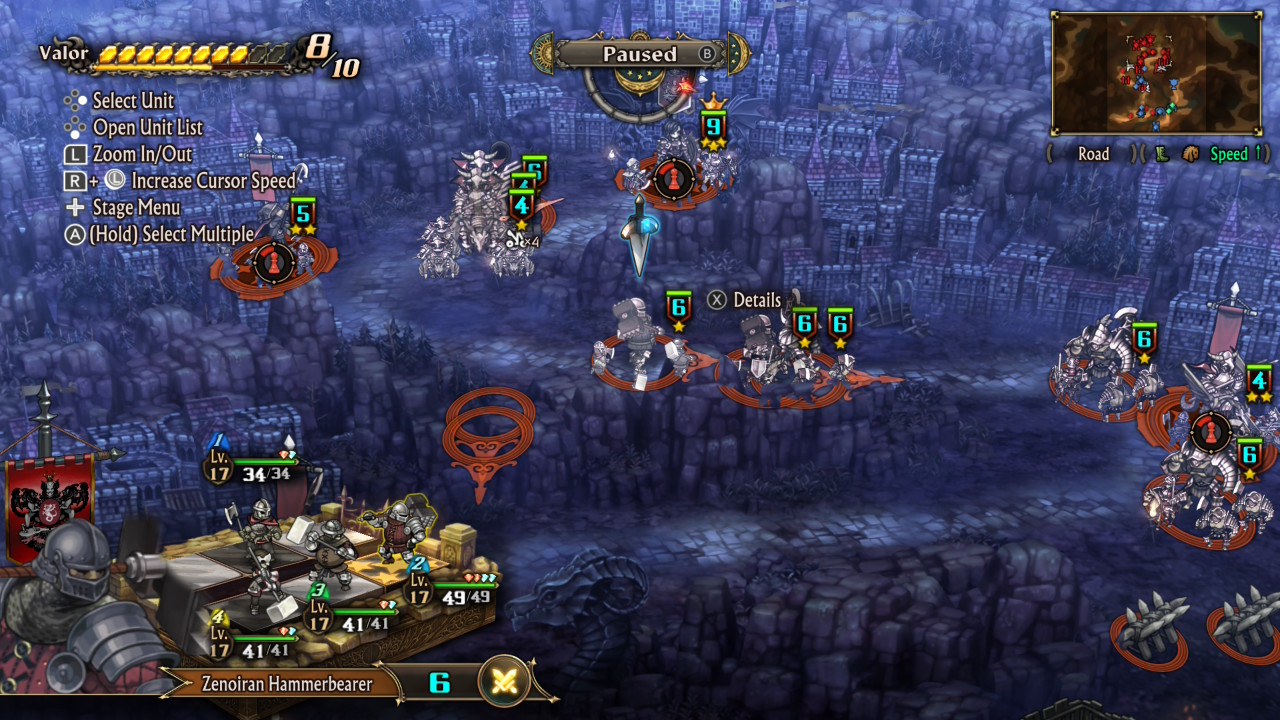
It’s the usual story of an evil person has taken over the world and it’s up to you, the long lost orphaned prince of the old regime to assemble an army and take it all back. It plays out as a series of essentially real-time strategy battles – which you can pause at any point to issue orders or use items so it’s not completely real-time – where each of your units is made up of a small group of individuals. Each of these units are completely customisable, so you can have several archers or several wyvern riders, or have up to six different classes in a single unit.
When your units collide with enemy units on the map, they have a fight. But unlike something like Fire Emblem or Advance Wars where it’s a simple exchange of blows, each fight is like an automatic turn based JRPG battle in which each character takes turns based on their speed and the actions of others.
Each character has their own strengths and weaknesses, like cavalry beat infantry, shields beat swords, massive hammers beat shields, and so on. The arrangement of characters in each unit matters too, so you put magic users or archers who are generally weak to direct attacks on the back row and people with shields and defensive moves on the front row.
So as well as all the fighting, most of which is to gain new allies or make regions safe, or free towns from the grip of the evil people who dress in red, there’s also a lot of overworld exploration to do. You find resources which can bring in money or help improve towns which in turn brings in more resources and therefore money and stuff. Doing missions, improving towns, improving your relationships within your army, and things like that also award you with another sort of currency called Honours, which you use to unlock more “character slots” within your army units, or to buy mercenaries, or to promote characters to a higher level class once you reach a certain point in the game.
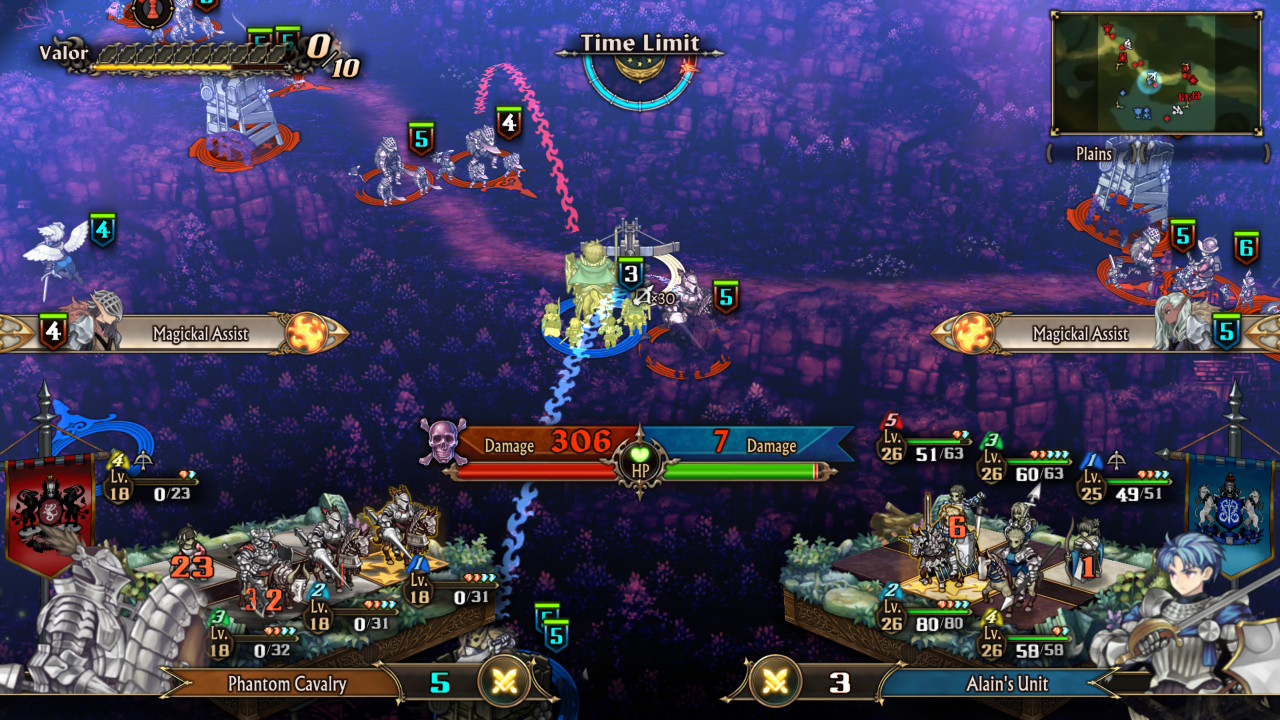
There’s loads of depth, should you want to go into it. How characters work together in a unit, how different character combos in a unit deal with enemy units, how who you set as the leader of a unit changes the moveset of the unit, how different weapons can unlock special moves, or you can just do what I do and scattershot characters into units and hope they work. I’ve either been very lucky or it doesn’t matter that much.
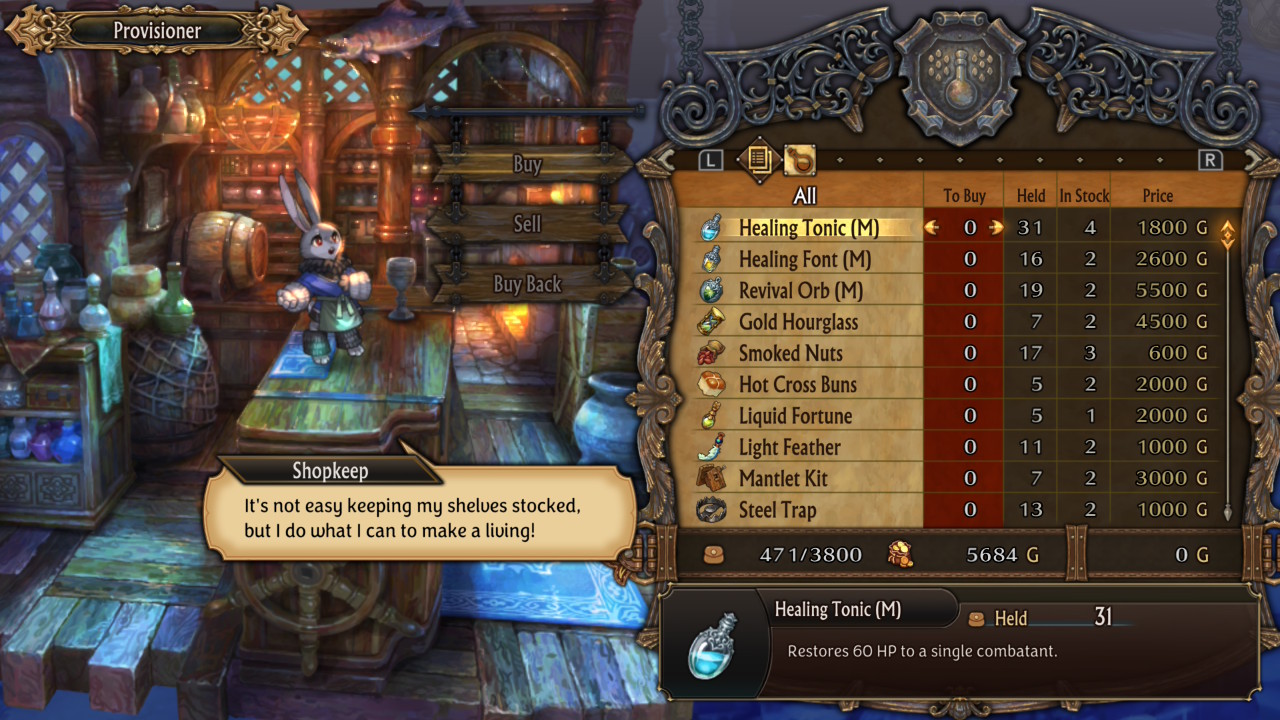
It’s great. And I really appreciate the quality of life stuff they’ve included. Like, because the fights have pre-determined outcomes, you can just skip them if you want. It won’t show you how it plays out, with the strengths, weaknesses and combos your characters have, but you might know that already. You can also speed up walking, fights, conversations, and so on, which are notoriously slow in most RPGs. Another thing that’s great is inventory management. You can hold loads of things, nothing is in short supply, there are loads of shops, money is plentiful, and it’s clear how new weapons and accessories will affect the characters if you equip them. You can also buy and sell in bulk, which is another time-saver.
I did manage to get seemingly overlevelled by the end, as the final couple of battles were long but I was virtually untouchable. That might be just because I tried to mop up every side quest, mission and collection requirement as I played. That said, there’s something satisfying about pummeling the end boss with impunity after 70-odd hours of story and campaign.
